App Agency
Your idea.
At home on a phone.
We develop mobile apps for specific tasks, with clear controls and the connections they need behind the scenes. The platform is chosen for your use case.
Briefly describe your task. The first conversation is free and non-binding.

Your application on the device.
Concept illustration- Interact
- Connect data
- Use on the go
Our own app gives you something concrete to inspect.
WebDAV Browser shows our work on an iOS app: navigation, file views and server connections. The product page gives you a practical view of the interface.
You assess the app on a device.
Interactive versions show how the key tasks feel on a phone. Your feedback informs further development.
The app and its data connections are planned together.
If login, synchronization or a backend are needed, we include them in the scope. Platform choice follows devices, usage and required features.
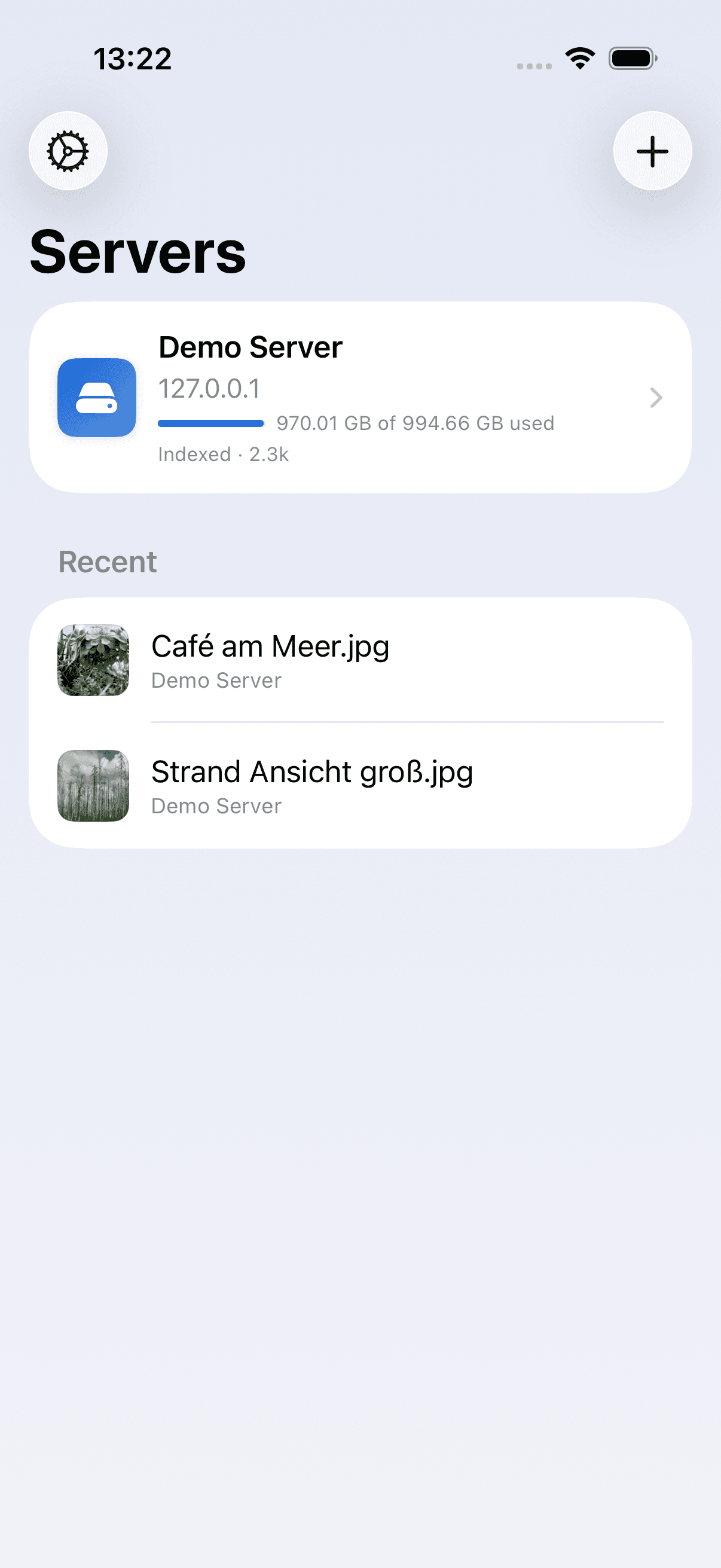
Files on a server. Within reach on an iPhone.
Our WebDAV Browser for iOS connects mobile file management to a WebDAV server. It shows how we design navigation, connections and file views for a small display.
- Compare the connection overview, folder view and image gallery.
- Use the product description to review the server and file features.
Your task
Where is your app idea today?
How we can help
What should someone do with the app?
We define the main workflow and make an interactive draft. You can review the idea before the full feature set is developed.
Tell us who the app is for and which task it should solve.
Ask about this taskYour selection is included in the contact form. The first conversation is free and non-binding.
An app starts with a task.
We develop the workflow at the center of what your users need.
Choose workflow and platform
We clarify the audience, devices and features. A draft shows how the controls could work.
Try it on devices
You test working versions on the agreed platforms, including connection failures and empty states.
Prepare for publication
We help with technical store materials and submission. Accounts and ongoing maintenance are agreed with you.
The app is tested on the agreed devices against the tasks that matter.
Know what you are commissioning.
Platforms, features, backend and offline use determine the effort. Store accounts, external services and maintenance are planned separately.
View pricing guidance
MVP app
A first core workflow on agreed target platforms.
from €7,900excl. VAT
Business app
Multiple workflows and integrations within an agreed scope.
from €14,900excl. VAT
Starting prices for an agreed scope. You receive an individual estimate before commissioning work.
Open the price configuratorStill wondering?
Do you develop for iOS and Android?
Depending on the requirements, native iOS development or a shared basis for iOS and Android may be suitable. The example shown is our iOS app. We agree on platform scope for your project.
Does the app need a server?
Shared data, accounts and synchronization often require a backend. A purely local application may work without its own server.
Can you help with publication and maintenance?
We can help with submission and ongoing maintenance. Store approval is decided by the respective operator. Support scope and availability are agreed separately.
Which task belongs on a phone?
Tell us the idea in your own words. We will discuss a useful first version and the platforms it needs.
In the free first conversation
We discuss your task, whether we can help and which information is needed to estimate the work. You decide about commissioning work separately.
Briefly describe your task. The first conversation is free and non-binding.